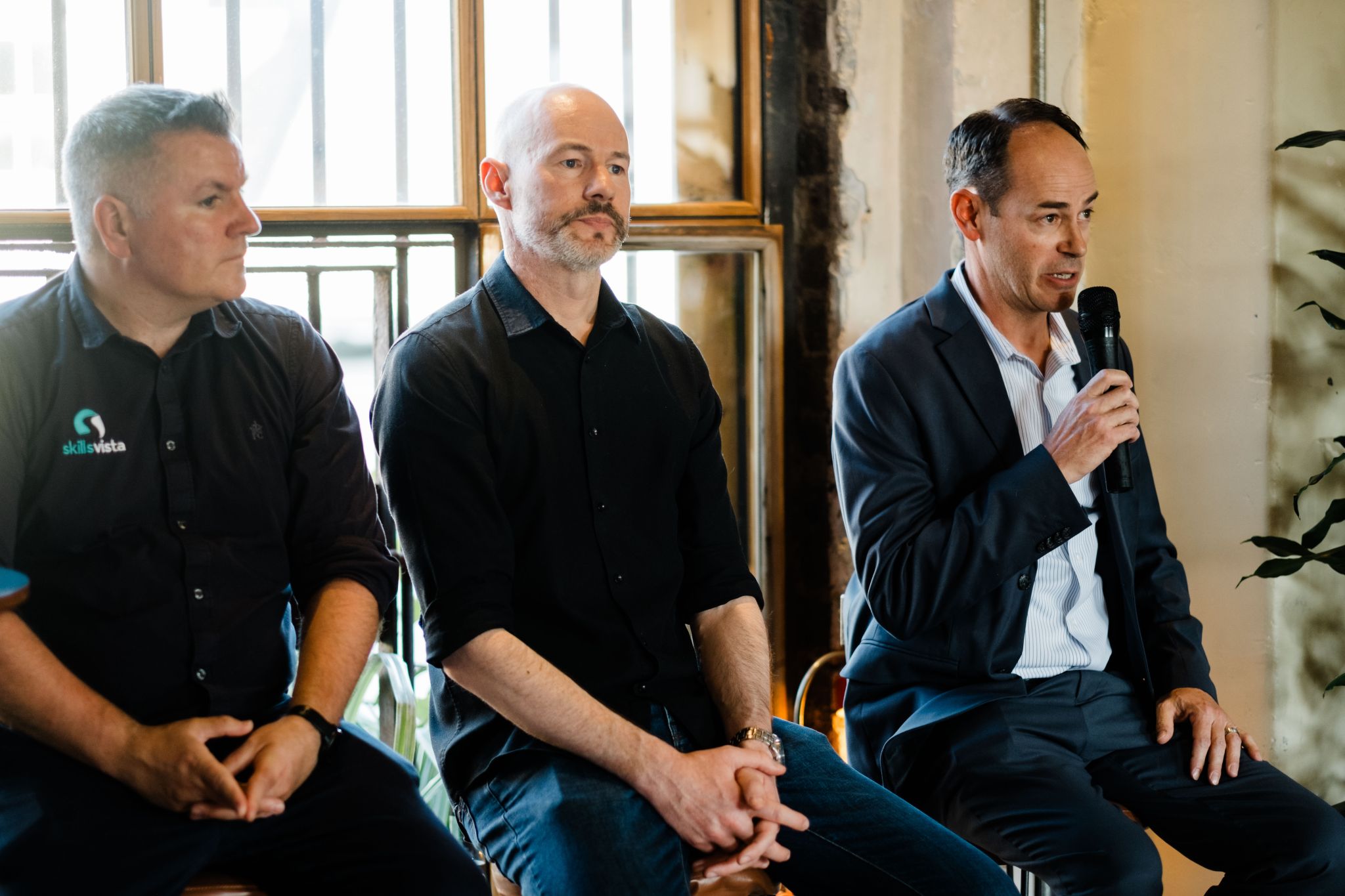
After Warsaw, the ACT Developed Tour continued to Dublin. It was a different city, a different ecosystem, and a different room, but the conversation picked up almost exactly where we left off in Poland.
Founders across Europe are not just trying to build better products. They are trying to understand how to scale through an increasingly complex environment shaped by regulation, capital constraints, market access, and cross-border competition. That was the focus of the Dublin Tech Forum, hosted by the Association for Competitive Technology ahead of Dublin Tech Summit.
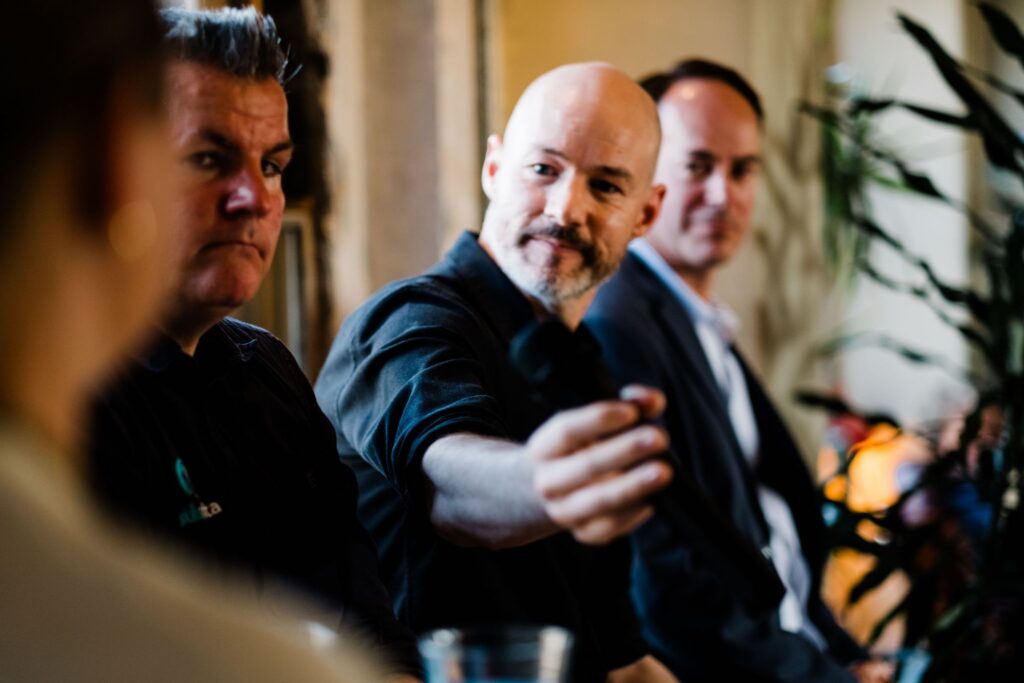
I joined Jason Culloty, Daniel Metadjer, and Chelsea Thomas for a panel discussion on what it takes to build and scale from Ireland, how regulatory friction affects startup growth, and what founders need to think about if they want to compete beyond their home market.
The setting was more intimate than a large conference stage, which made the conversation better. There is real value in a room where founders, operators, investors, and policy voices can talk directly about what is working, what is not working, and what small technology companies actually need in order to grow.
That is one of the things I have appreciated most about the ACT Developed Tour. These are not abstract policy conversations. They are practical conversations with people who are trying to build companies in the real world.
Dublin Has a Serious Startup Conversation Happening
Dublin is already an important technology market. Global technology companies have major operations in Ireland, the city has a strong talent base, and founders have access to both European markets and a larger international technology ecosystem. It also sits at an interesting intersection between local entrepreneurship, European regulation, U.S. commercial influence, and global capital.
That makes Dublin a natural place to discuss the future of startup scaling in Europe. For founders in Ireland, the question is not whether the ambition exists. It clearly does. The more difficult question is how to turn local momentum into international scale while navigating the practical realities of regulation, funding, hiring, customer acquisition, and policy uncertainty.
Great companies are rarely built in isolation. They are built inside ecosystems. Those ecosystems can either help founders move faster, or they can quietly slow them down.
Regulation Is Now Part of the Go-To-Market Conversation
One of the strongest themes from both Warsaw and Dublin was that regulation is no longer something founders can afford to think about later. For many startups, regulation used to feel like a problem for bigger companies. Build first. Sell first. Raise money first. Deal with policy later.
That approach is getting harder.
In Europe, founders are trying to understand how rules around privacy, AI, competition, marketplace access, data use, and digital policy all fit together. Each regulation may have its own purpose, but the combined weight can create real friction for smaller companies.
Large companies can absorb complexity. They can hire legal teams, compliance teams, government affairs teams, and consultants. Startups usually cannot. For a startup, complexity becomes cost. It becomes delay. It becomes uncertainty. It becomes one more reason an investor hesitates or a customer waits.
In some cases, it becomes the difference between entering a market or deciding the risk is too high.
That does not mean founders should ignore regulation. It means policymakers need to understand how regulatory complexity actually shows up inside a small business. It does not show up as a policy memo. It shows up as time founders are not spending with customers. It shows up as legal costs that could have gone into product. It shows up as slower hiring, delayed launches, and reduced appetite for cross-border growth.
The Capital Flow Problem
Regulatory friction does not only affect compliance. It affects capital.
Investors do not like uncertainty. If a market becomes harder to understand, harder to enter, or harder to scale across, capital becomes more cautious. That is especially true for startups that already face trust barriers because they are early, foreign, or entering a market where they do not yet have strong local proof.
This is where regulation and credibility start to overlap. A founder may have a great product, but if investors are unsure how the company will navigate cross-border regulation, how it will sell into a new market, or how quickly it can scale through policy complexity, that becomes part of the investment risk.
The same thing happens with customers. A buyer may like the solution, but if the company cannot clearly explain how it handles data, compliance, privacy, local support, and operational risk, the deal slows down.
That is why I continue to believe credibility has to be built earlier. Founders need more than a product story. They need a market story, a trust story, and a proof story.
What Founders Often Underestimate About International Expansion
A lot of companies look at international expansion as a destination. We are going to the U.S. We are going to Europe. We are opening a new market.
But expansion is not just a location decision. It is a readiness decision.
Founders need to understand the buyer, the local competitive environment, which proof points matter, which advisors they need, whether they have early customer validation, how the policy environment works, and why the market should trust them.
These questions matter because new markets do not automatically care what you have accomplished somewhere else. That can be frustrating for founders. A company may have strong traction in Ireland, Poland, Germany, or another European market, but when it enters the U.S. or another international market, it may have to rebuild trust almost from zero.
That is not fair, but it is real.
The companies that handle expansion well understand this. They do not wait until they are ready to sell before they start building relationships. They create market context early. They talk to potential customers early. They learn from local operators. They pressure-test their positioning. They start building credibility before they need it.
That is the difference between expansion as a strategy and expansion as a hope.
Community Matters More Than Founders Think
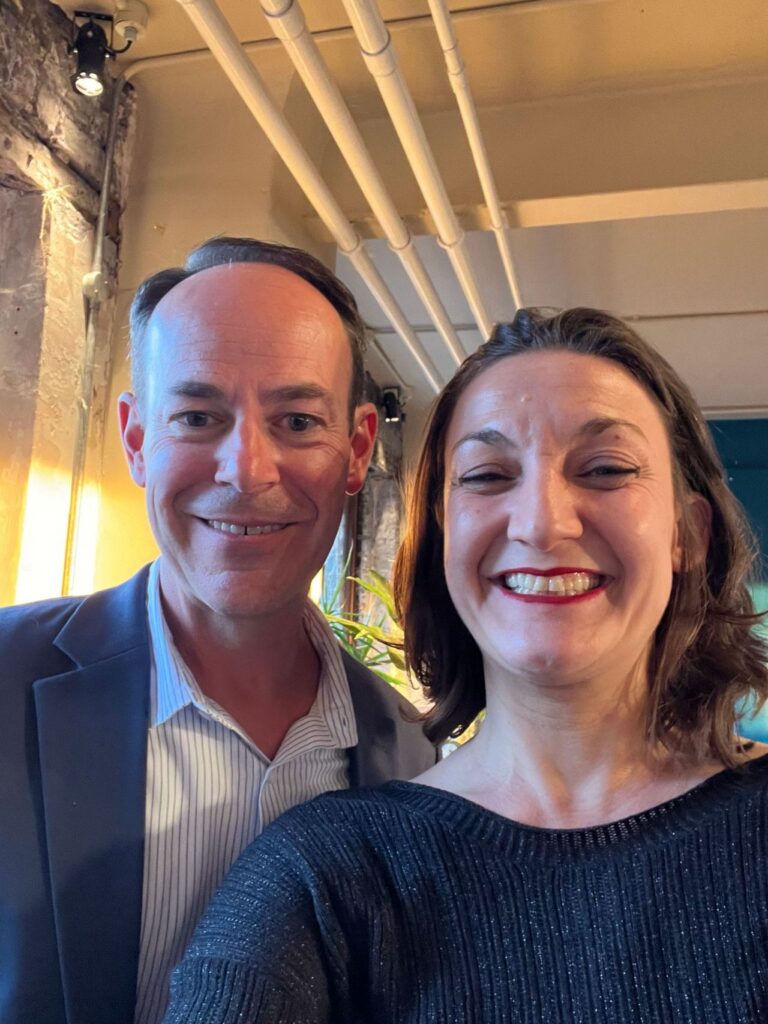
Another theme that came through strongly in Dublin was community.
Founders often feel like they are supposed to have all the answers. They are expected to understand the product, the customer, the market, the capital strategy, the regulatory environment, the hiring plan, the sales motion, and the expansion strategy.
That is impossible to do alone.
Strong ecosystems help founders reduce avoidable mistakes. They create warm introductions.
They expose companies to market realities earlier. They give founders a place to ask better questions. They connect local ambition to international opportunity.
This is why events like the Dublin Tech Forum matter. The value is not just the panel. It is the room. It is the conversation before and after. It is the ability for founders, policy leaders, investors, and operators to connect around shared problems instead of trying to solve everything in isolation.
That is also why ACT’s work matters. ACT brings small technology companies into policy conversations that are often dominated by larger players. For startups, scaleups, and independent developers, that representation is important.
If the only voices shaping policy are the largest companies, then policy will naturally reflect the operating reality of the largest companies. That is not good enough.
The Founder Reality in Ireland
What I appreciated about the Dublin conversation was how practical it felt. This was not a theoretical discussion about Europe, regulation, or global markets. It was grounded in the day-to-day reality of building a company from Ireland.
Founders are trying to grow in an environment where the opportunity is real, but so is the complexity. They have access to talent, European markets, and global technology networks. At the same time, they have to compete for capital, attention, talent, customers, and trust.
That makes credibility even more important. A startup does not need to be large to be credible, but it does need to be clear. Clear about the problem. Clear about the buyer. Clear about the market. Clear about the proof. Clear about why now. Clear about why this team can win.
That clarity matters in fundraising. It matters in sales. It matters in partnerships. It matters in policy conversations. It also matters when a company tries to scale beyond the market where it was founded.
The Connection to Quanthym and The Credibility Engine
The Dublin conversation connected directly to the work I am doing through Quanthym and my book, The Credibility Engine.
At Quanthym, I work with founders and growth-stage companies on go-to-market strategy, market positioning, commercial execution, and the systems needed to build trust in crowded or unfamiliar markets. That work becomes especially important when a company is trying to enter a new market, raise capital, secure partnerships, or move from early traction to scalable growth.
The Credibility Engine is built around the same idea. In a market full of noise, credibility is not just a nice-to-have. It is one of the most important inputs into growth. It is what helps customers believe, investors lean in, partners take meetings, and markets give a company the benefit of the doubt before everything is fully proven.
That is especially true for startups expanding internationally. You cannot assume credibility travels automatically. You have to build it deliberately.
Final Thought
I left Dublin with the same conviction I had leaving Warsaw, but with a slightly different perspective. European founders have the ambition. Ireland has the ecosystem. Dublin has a meaningful role to play in the future of technology and startup growth. But the companies that scale successfully from here will need more than product strength.
They will need to understand regulation as part of the market. They will need to build credibility earlier. They will need to create relationships before they need them. They will need to engage with the communities and policy organizations that can help shape a healthier environment for startup growth.
Most of all, they will need to think globally before global expansion becomes urgent.
The Dublin Tech Forum created space for the right people to have the right conversation at the right time. For founders building from Ireland, that conversation matters. And for those who attended, it was already a step in the right direction.
I also want to thank ACT for the invitation to speak in Dublin and for continuing to create these conversations across global startup ecosystems. A special thank you to Chelsea Thomas, Ivy Ide Reynolds, Bradley Simonich, Alexandra Cooke, and Caitlin Irr for the work they continue to do bringing founders, operators, and policy voices together.
I have been a member of ACT for more than three years, and I continue to believe it is a valuable community for small technology companies that care about policy, market access, and the future of the app economy. For anyone interested in learning more about ACT membership, I would recommend reaching out to Brad Simonich at ACT.